Benito Antonio’s Thirteen Minutes for an Island
A love letter to Puerto Rico and the unifying performance that reminded us of our shared humanity

There are countries you know you will love before you ever arrive. Puerto Rico was one of those places for me. As a little girl growing up in the United States, I knew Puerto Rico was considered part of our country, but it always felt set apart in my imagination. It sounded tropical. Layered with history. Complicated in ways I did not yet understand. I knew it had been colonized. My high school Spanish class taught me that it meant rich port. And I knew it carried a story much older and deeper than the rolled-up map above the chalkboard hanging in my elementary school classroom. It lived in my imagination for years. It was a place I always dreamt of visiting.
The first time I technically arrived, I was twenty-eight, fresh off crossing the Atlantic Ocean by sailboat and returning from Barbados. We had a layover in San Juan before flying back to the mainland United States. I pressed my face against the small airplane window, scanning the landscape below with a kind of longing you only feel after a lifetime of wanting something you have never seen, yet somehow already feel connected to. Lush green fields. Bright roofs. Mountains in the distance. The bizarre visual of seeing classic American freeway signs, green with white lettering, in English. Laundry flapping in the wind. I had finally made it to Puerto Rico. The timing of our itinerary did not allow for an adventure into the island, but I promised myself I would return with the same cracked open heart I felt when I first landed on the heated tarmac.
Years later, I finally did. My partner had been to Puerto Rico many times through his work as a law professor. The subjects he studies and the causes he stands for had brought him there repeatedly with colleagues. When I finally went for the first time, we took my daughter with us.
We stayed in Old San Juan and then rented a car and drove the perimeter of the island. We crossed through the interior. We stayed on the western coast where the Atlantic meets the Caribbean Sea in Rincón. I saw Puerto Rico not just as a visitor walking pastel streets, but as a traveler moving through its geography, its history, and its contradictions.
In the interior of the island, giant American warehouses dot the landscape. Many of them sit abandoned. For decades, American corporations operated in Puerto Rico under a federal tax break called Section 936 of the U.S. Internal Revenue Code. It allowed companies especially pharmaceutical and manufacturing giants to avoid federal corporate income taxes on profits earned there. When Congress phased out Section 936 in 1996 companies gradually began leaving. Manufacturing jobs declined, pharmaceutical plants downsized, and closed. What remains are hollow structures scattered across lush green hills, quiet reminders of an economic relationship that has never been equal.
Puerto Rico is a heartbreakingly beautiful paradox. It’s impossible to spend time there without seeing the long shadow of colonization. And in recent years, you cannot miss the new version of it. In 2019, Act 60, Puerto Rico’s Tax Incentives Code, began attracting investors and wealthy newcomers who started buying up properties in Old San Juan. In the last few years, those purchases have driven housing costs into the millions, with prices many say rival Manhattan real estate. The taxes these new residents pay are minimal compared to what most Puerto Ricans pay. The result is familiar. Generations of families are priced out of the neighborhoods they built, while historic homes sit dark for most of the year, maintained for owners who visit occasionally.
Old San Juan, once wildly vibrant with local life, now holds rows of immaculate homes waiting for seasonal owners. People paid to maintain spaces that are rarely lived in. It is a familiar colonization pattern wearing modern clothes.
The last time we visited, my partner and I returned alone. The entire island was without power. Generators hummed everywhere. We carried our luggage up five flights of stairs. Candles flickered in restaurant windows.
People have adapted with a grace that felt both beautiful and deeply unfair because the island’s fragile electrical grid is not an accident of geography. It is the result of decades of neglect, outdated infrastructure, and a colonial relationship that has never prioritized the long term well-being of the citizens who live there.
I met people determined to reclaim ancestral farmland. I met those people in open air restaurants. I met those people on the beach. I met those people at the grocery store by striking up conversations, asking questions, and sharing how grateful I was to finally be visiting Puerto Rico. Young Puerto Ricans are reviving their family farms, practicing regenerative and organic agriculture so the island can feed itself again. Community organizers fighting housing displacement. Locals committed to restoring cultural and economic independence in quiet, persistent ways.
I realized something important about myself while listening to them. I am not the wealthy outsider buying a two-million-dollar house and leaving it empty. But I am also not the person living with the consequences. I am an in between observer. A visitor. A witness. Someone who can afford to travel there while nearly half the island lives below the poverty line.
During the halftime show of the Super Bowl, Bad Bunny, Benito Antonio Martínez Ocasio, stood on one of the largest stages in the world and told the historical story of Puerto Rico without ever turning it into a lecture. He did it through rhythm. Through joy. Through pride. Through music pulsing with ancestry and modernity at the same time. It was both a celebration and a healing balm.
In thirteen symbolic minutes, millions who may have known Puerto Rico only as a cruise stop or beach vacation were immersed in its soul, its dignity, its resilience, its beauty. My dear friend, born in Puerto Rico, who moved to the mainland at nine, wept as the profundity of the performance sank in. In a matter of minutes, generations of trauma was acknowledged, and a door opened to a kind of collective healing, shared in living rooms across the world.
Bad Bunny did not ask for sympathy. He did not ask for permission. He simply showed us through artistic symbolism. And something happened around the world. We watched. We felt. We recognized our shared humanity. We all want the same fundamental things: to be safe, to be loved, to live with dignity. To live in a place that honors us back.
Puerto Rico does not require a passport for Americans to visit. But it requires something else to truly see. Attention. Respect. Curiosity. Humility. It is not a tropical extension of the mainland. It is an island with a long memory. And for thirteen minutes during Super Bowl LX’s halftime show, Benito Antonio reminded the world that Puerto Rico is not an afterthought. It is a heartbeat connected to the whole planet. In that moment, millions saw Puerto Rico’s soul, dignity, and resilience on a stage watched by 128 million people, and the performance became a global celebration of identity and unity, not just entertainment.
I am grateful to have visited Puerto Rico three times. I cannot wait to return. To listen more. To learn more. To walk those pastel streets again. To sit beside that turquoise water. To honor a place that has given me beauty, perspective, and a deeper understanding of what colonization looks like when it never quite ends. Puerto Rico. Rich port. May hope grow louder than history
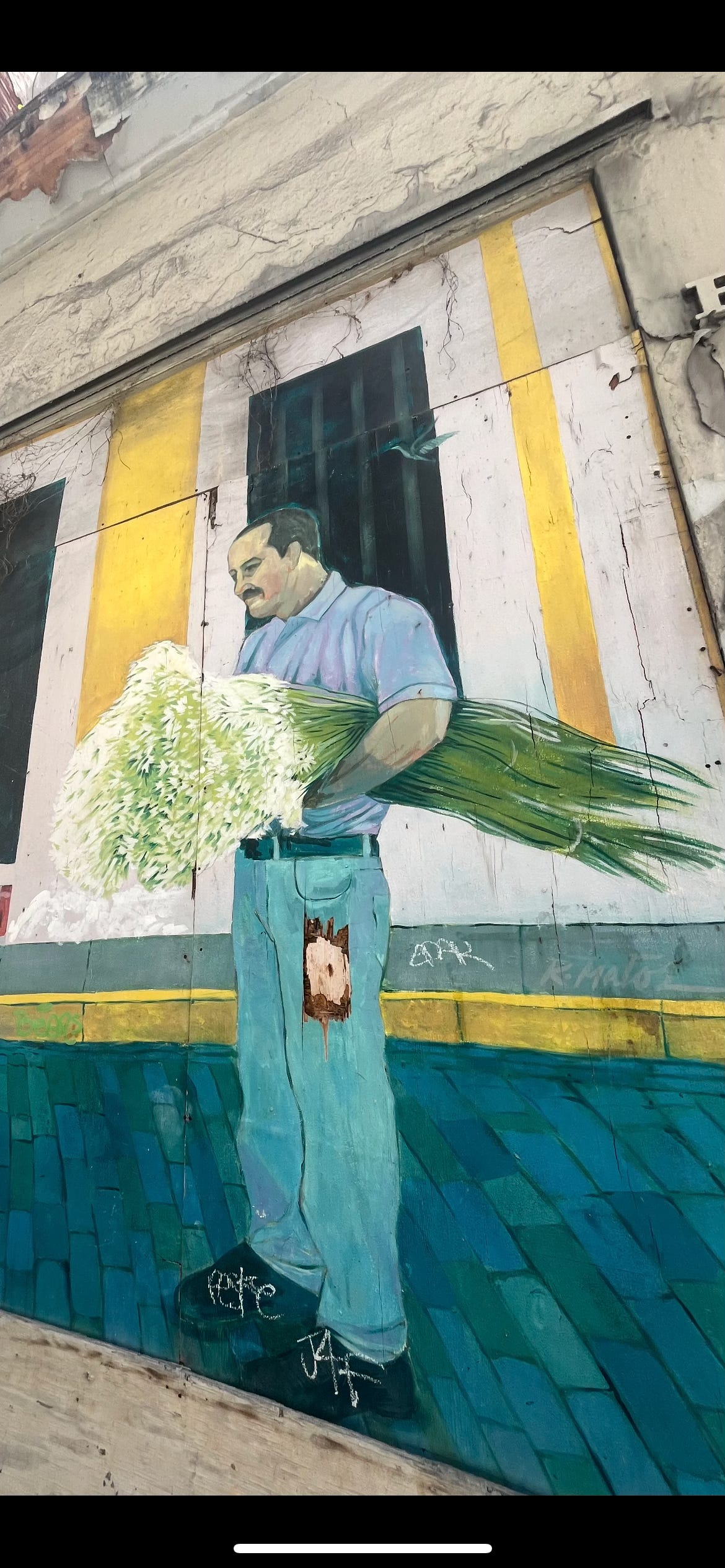
Old San Juan is filled with gorgeous murals.
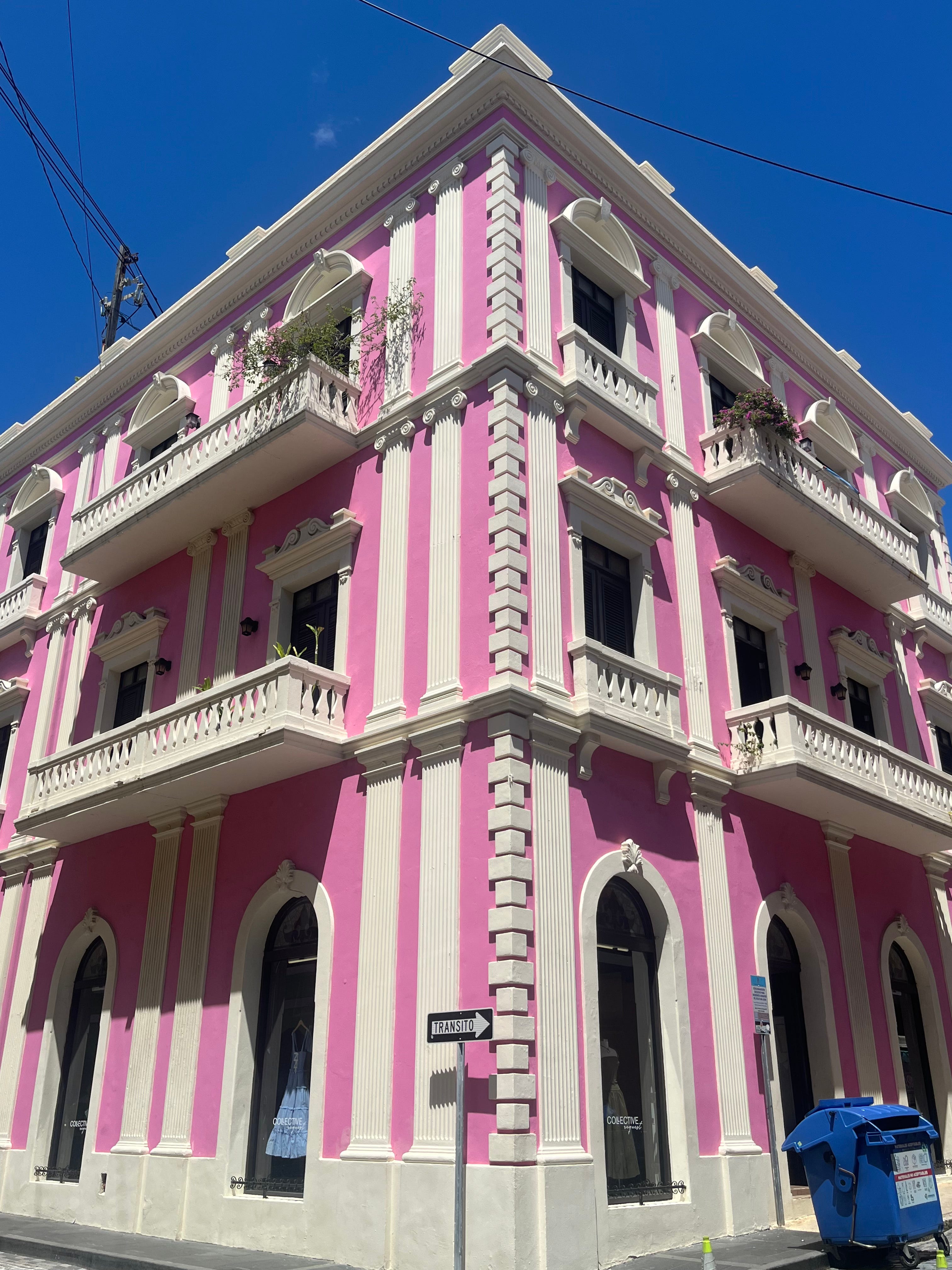
Pastel hued buildings in old San Juan.
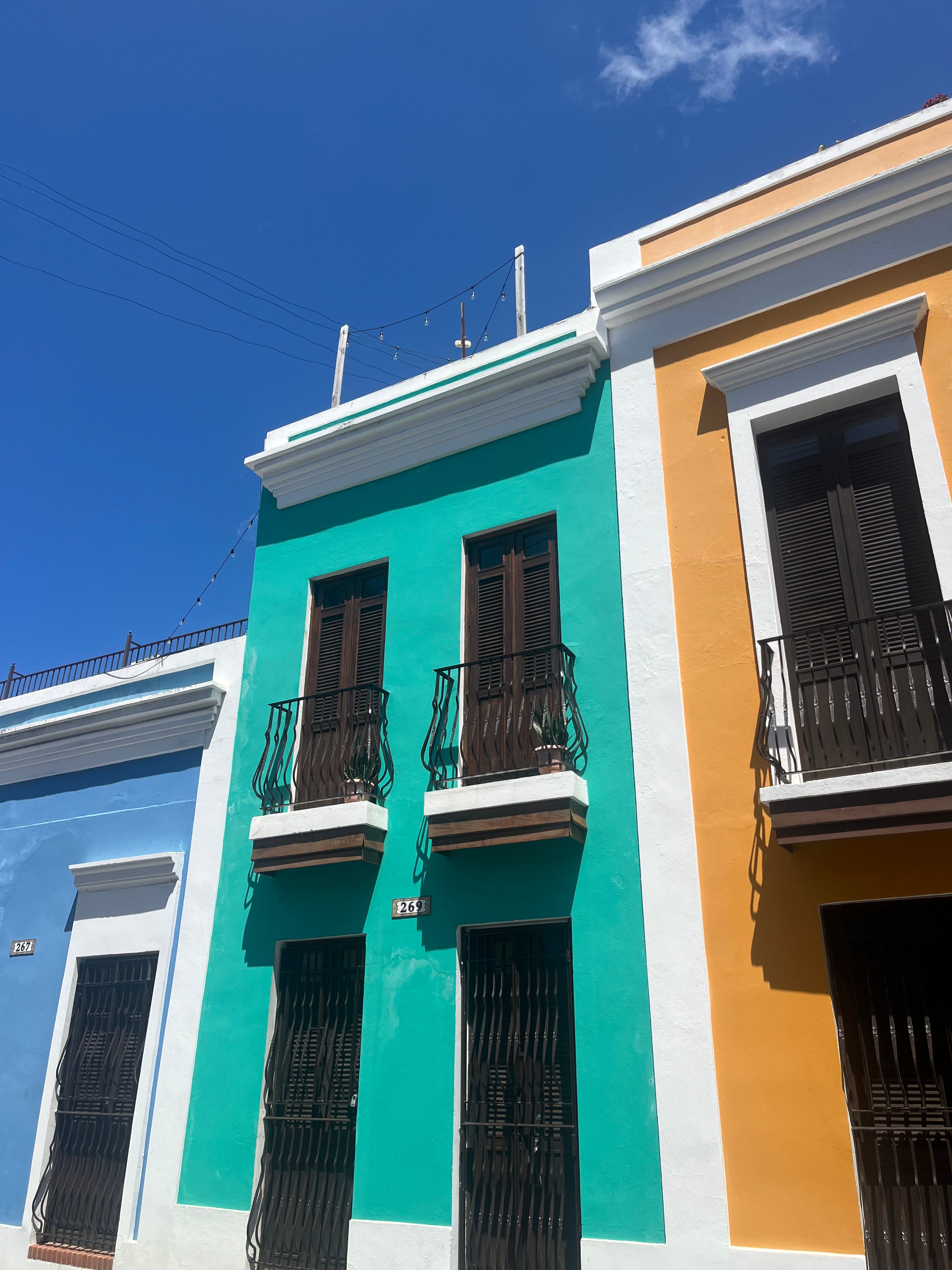
Old San Juan, the beach in Rincon, and Bad Bunny performing during the Super Bowl halftime show.


Karson! As you know, this performance deeply resonated with me. You called me right after, and I was crying. Deeply moved! I lived in Puerto Rico as a young girl for 5 years, and It's culture, and vibration of music and soul, deeply penetrated me. This performance was so filled with Love, connection, hope, respect, admiration. All things we , as Americans seem to struggle to find. So deeply divided. We are a lost and flawed country. It makes me so sad. Makes me feel more connected with that beautiful little Island.
Love the murals and photos and your story about PR.